ByJohn A
How Accurate Device Grading Improves Smartphone Trade-In Programs
Smartphone trade-in programs have become an important part of the modern device lifecycle. Businesses, retailers, refurbishers, and resellers rely on consistent evaluations to determine what a used device is worth and how it should be handled after acquisition. When grading is inconsistent, even small differences in assessment can affect pricing, refurbishment decisions, inventory value, and customer trust.
Accurate grading creates a more structured approach to evaluating smartphones based on their physical condition, functionality, and overall usability. For organizations managing a B2B mobile device trade-in program, reliable grading can make large-scale transactions easier to manage while reducing unnecessary disputes. Combined with the right technology and clearly defined processes, accurate device grading can turn trade-ins into a more predictable and efficient business operation.
Why Accurate Device Grading Matters in Trade-In Programs
Device grading is more than assigning a label such as “good” or “excellent.” It involves assessing multiple aspects of a smartphone and translating those observations into a consistent condition category. This consistency becomes especially important when businesses process hundreds or thousands of devices.
A structured grading system can also help different teams reach similar conclusions when evaluating devices. This creates a common standard that supports purchasing, refurbishment, resale, and inventory management.
Creates Consistent Device Evaluations
Consistency is one of the biggest advantages of an organized grading process. Without defined criteria, two employees may evaluate the same smartphone differently, particularly when judging scratches, dents, screen condition, or functional issues.
A clear grading framework establishes expectations for every evaluator. For example, a business might assess:
- Screen condition and visible damage
- Body scratches, dents, and cosmetic wear
- Camera, speaker, microphone, and charging functionality
- Battery condition and overall device performance
- Signs of liquid exposure or other physical damage
When these factors are evaluated consistently, businesses can create more reliable trade-in values and reduce variations between individual assessments.
Supports Fairer Trade-In Valuations
The condition of a smartphone directly influences its potential resale or refurbishment value. A device with minimal cosmetic wear and fully functioning components may justify a different valuation than one with a cracked display or significant physical damage.
Accurate grading helps businesses connect condition categories with predefined valuation rules. This makes pricing easier to explain and apply across large volumes of devices. It can also make trade-in offers more predictable for organizations participating in recurring B2B transactions.
How Grading Improves B2B Mobile Device Trade-In
Large-scale trade-in programs have different requirements from individual consumer transactions. Businesses may exchange large batches of smartphones at once, making manual inconsistencies more difficult to identify and correct.
For a B2B mobile device trade-in operation, standardized grading can create a repeatable workflow from initial inspection through final disposition. This is particularly useful when devices come from different locations, departments, employees, or business customers.
Makes High-Volume Processing More Efficient
Processing a large batch of smartphones requires more than simply inspecting each device. Teams need a repeatable method that allows evaluators to move through devices efficiently while recording relevant information.
A standardized grading workflow can help employees follow the same sequence for every phone. This reduces unnecessary decision-making and makes it easier to identify exceptions that require additional inspection.
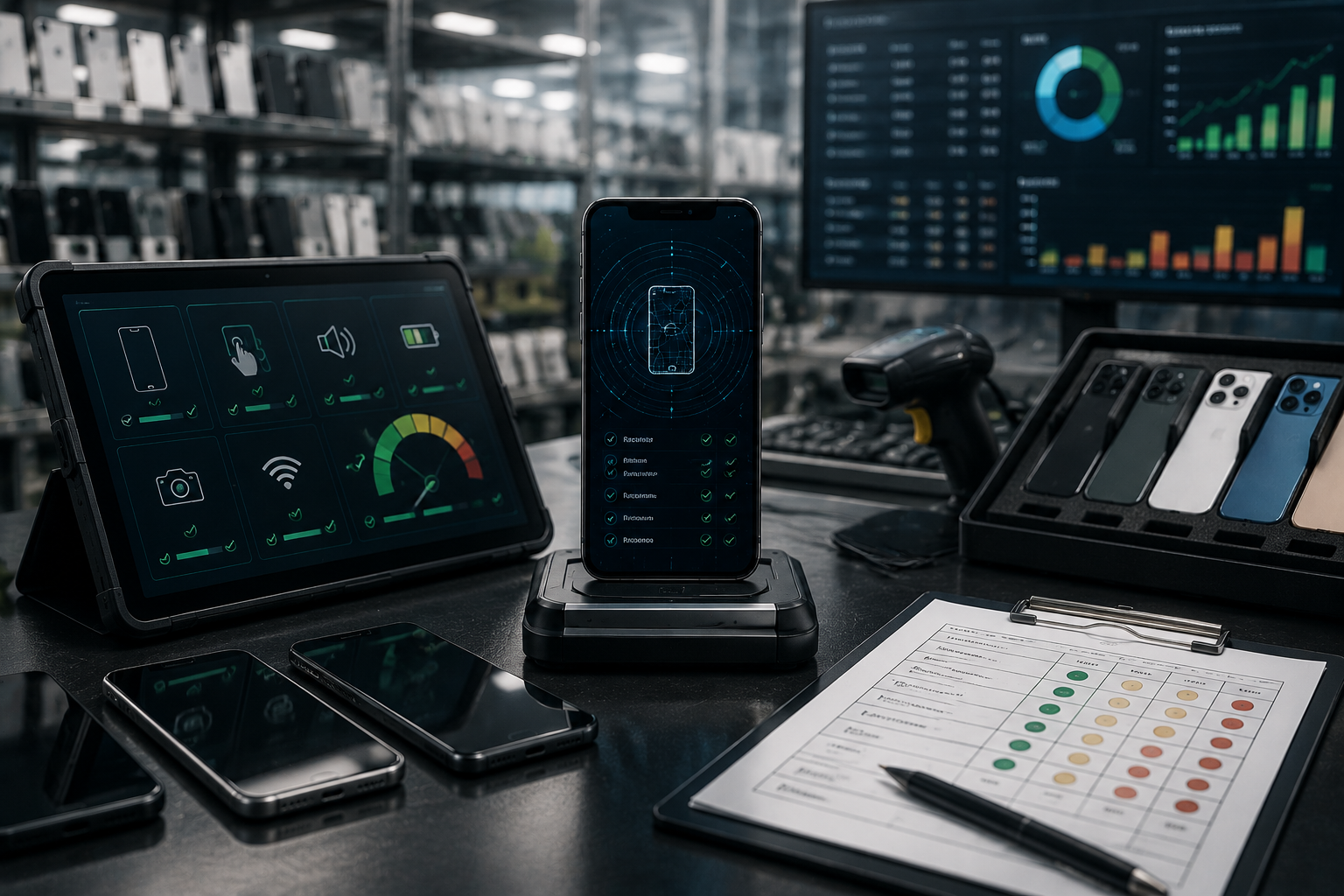
For example, an organization receiving 500 smartphones could establish a grading checklist that covers physical condition, functionality, device identifiers, and accessories. Each device can then move through the same evaluation process, creating a more organized trade-in pipeline.
Reduces Disputes Between Buyers and Sellers
Condition-related disagreements can create delays in business-to-business transactions. A seller may expect a higher value based on an initial assessment, while the buyer may identify damage or functionality problems during a later inspection.
Documented grading criteria provide a clearer basis for these discussions. When both parties understand how condition categories are determined, trade-in decisions become easier to review.
Businesses can strengthen this process by recording specific observations rather than relying only on a general grade. Photos, inspection notes, and test results can provide additional context when a device’s condition is questioned.
The Role of Mobile Phone Trade-In Software
Technology can make device grading more scalable, particularly when a business manages a high volume of smartphones. Mobile phone trade-in software can help organize information collected during inspections and connect different stages of the trade-in workflow.
Rather than relying entirely on spreadsheets or disconnected records, businesses can use centralized systems to manage device information. The goal is not simply to automate grading but to make the entire evaluation process more organized and traceable.
Centralizes Device Information
A trade-in program can generate significant amounts of information for every smartphone. This may include device identifiers, condition assessments, pricing information, inspection results, and disposition details.
Centralized software can help teams keep these records connected to the correct device. This makes it easier to retrieve information when a device moves from intake to refurbishment, resale, recycling, or another stage.
For growing trade-in operations, centralized records can also improve visibility across teams. Employees can work from the same information instead of maintaining separate records that may become outdated or inconsistent.
Helps Standardize Grading Workflows
Software can support a predefined grading workflow by guiding evaluators through specific inspection criteria. This can reduce the chance that important evaluation steps are skipped during busy processing periods.
A standardized digital process may include fields for cosmetic condition, functional testing, device identification, and other relevant observations. Businesses can then use the resulting information to support consistent grading decisions.
CellDe can be part of a broader technology strategy for businesses looking to strengthen device verification and trade-in processes. By combining structured grading with reliable device information, organizations can create a more dependable foundation for handling used smartphones.
Practical Ways to Improve Device Grading Accuracy
Accurate grading depends on both technology and process design. Even sophisticated software cannot compensate for unclear grading standards or inconsistent inspections.
Businesses should therefore focus on creating a grading system that employees can understand and apply repeatedly. Regular reviews can also help identify areas where different evaluators interpret condition categories differently.
Create Clearly Defined Grade Categories
Every grade should have specific criteria rather than subjective descriptions. Terms such as “excellent,” “good,” and “fair” can mean different things to different people unless businesses clearly define what each category includes.
A useful grading framework should explain acceptable levels of cosmetic wear, functional performance, and damage. It should also clarify which conditions require a device to move into a lower category.
Businesses can improve consistency by creating written examples for common scenarios. A phone with minor surface scratches, for instance, should receive the same classification regardless of which trained employee evaluates it.
Train Evaluators and Review Results
Employee training plays an important role in maintaining consistent grading standards. Evaluators should understand the criteria, know how to perform required tests, and recognize conditions that may require further review.
Periodic quality checks can reveal whether grading decisions remain consistent over time. Businesses can select samples from completed batches and compare evaluations against established standards.
Useful quality-control practices include:
- Reviewing a sample of graded devices
- Comparing evaluator decisions for similar conditions
- Updating examples when recurring inconsistencies appear
- Providing refresher training when standards change
This ongoing approach helps prevent grading accuracy from declining as trade-in volumes increase.
How Accurate Grading Supports the Device Lifecycle
Device grading does not end when a trade-in value is assigned. The resulting condition information can influence what happens to a smartphone next.
A well-graded device can be directed toward an appropriate outcome based on its condition and potential value. This helps businesses make more informed decisions about refurbishment, resale, parts recovery, or recycling.
Improves Refurbishment Decisions
Not every used smartphone requires the same level of refurbishment. Some devices may only need cosmetic preparation, while others may require component replacement or additional testing before resale.
Accurate grading gives refurbishment teams useful information at the beginning of the process. Instead of treating every device identically, businesses can prioritize work according to condition and expected value.
This can help create more organized workflows and reduce unnecessary refurbishment effort. Over time, historical grading information can also help businesses identify common device conditions and plan their operational resources accordingly.
Strengthens Inventory Planning
Reliable grades can make inventory easier to categorize and manage. Businesses can identify how many devices fall into each condition group and use that information when planning resale or refurbishment capacity.
For example, if a trade-in batch contains a high percentage of devices requiring significant work, the organization can plan accordingly before those phones reach the next stage. This improves visibility and supports more informed operational decisions.
When combined with device verification and organized records, accurate grading can provide a clearer picture of the inventory entering a trade-in program.
Building a More Reliable Trade-In Strategy
An effective trade-in program depends on several connected processes rather than one inspection step. Device identification, condition grading, valuation, documentation, and final disposition should work together.
Businesses can start by reviewing their existing workflow and identifying where inconsistencies occur. From there, they can introduce standardized grading criteria, employee training, digital records, and quality-control checks.
For organizations managing high-volume B2B mobile device trade-in programs, these improvements can create a stronger foundation for scaling operations. CellDe can complement this approach by helping businesses incorporate device verification into a more structured trade-in workflow.
Conclusion
Accurate device grading gives smartphone trade-in programs a stronger foundation for consistent valuations, efficient processing, and better inventory decisions. For businesses handling a B2B mobile device trade-in, standardized condition criteria can reduce uncertainty while making large-scale transactions easier to manage.
A reliable grading strategy should combine clearly defined categories, trained evaluators, documented inspection results, quality checks, and appropriate technology. Mobile phone trade-in software can further organize device information and support a consistent workflow from intake through final disposition.
Businesses looking to improve the reliability of their trade-in operations should treat grading as a core part of the device lifecycle rather than a simple pricing step. With solutions such as CellDe supporting a more organized verification process, organizations can build greater consistency into every stage of their smartphone trade-in program.